- Fasteners & hardwareSection →
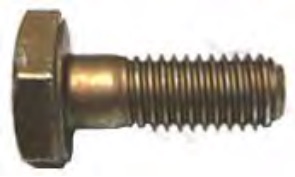 AN bolts, AN3 to AN8Fasteners & hardware
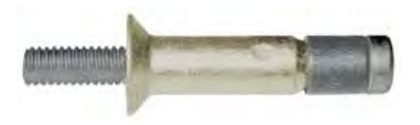 Blind fastenersFasteners & hardware
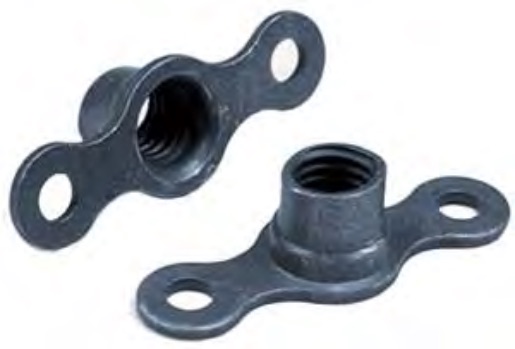 NutplatesFasteners & hardware
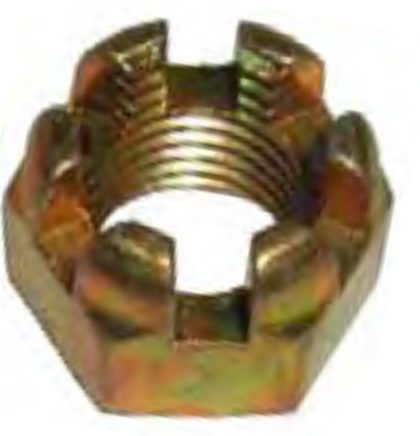 NutsFasteners & hardware
 ScrewsFasteners & hardware
 WashersFasteners & hardware
- Tool buying guidesSection →
 Sheet Metal Tool KitTool buying guides
 Rivet GunsTool buying guides
 Bucking BarsTool buying guides
 Dimple or CountersinkTool buying guides
 Cleco Pliers, and When a Cleco Gun Is Worth ItTool buying guides
 Drill Bits for AluminumTool buying guides
 Rivet SqueezersTool buying guides
 Microstop Countersink CagesTool buying guides
 Cherry pulling heads and rivetersTool buying guides
 Deburring Tools for AluminumTool buying guides
 Torque WrenchesTool buying guides
 Sheet Metal ShearsTool buying guides
 Bending Brakes and Hand SeamersTool buying guides
 Rivet Removal ToolsTool buying guides
 Hole Finders, Edge Markers and Rivet SpacersTool buying guides
- MaterialsSection →
 2024-T3 AluminumMaterials
 2024-T3 vs 6061-T6Materials
 7075-T6 AluminumMaterials
 6061-T6 AluminumMaterials
 4130 SteelMaterials
 Ti-6Al-4V TitaniumMaterials
 Fiberglass Fabric StylesMaterials
 Carbon and Aramid FabricMaterials
 Core and Bagging ConsumablesMaterials
- Fillers: microballoons and fumed silicaMaterials · Coming soon
- Which repair material for which partMaterials · Coming soon
- Sealant types and classesMaterials · Coming soon
- Reference chartsSection →
 Cleco Size & Color ChartReference charts
 Rivet Identification ChartReference charts
 Drill Size per Rivet ChartReference charts
 Minimum Bend Radius ChartReference charts
 Aluminum Sheet Gauge ChartReference charts
 AN Bolt & Nut Torque ChartReference charts
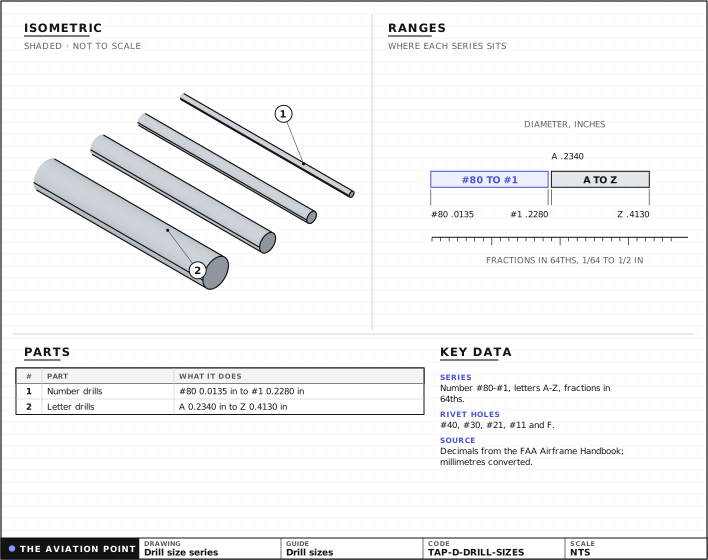 Drill Size ChartReference charts
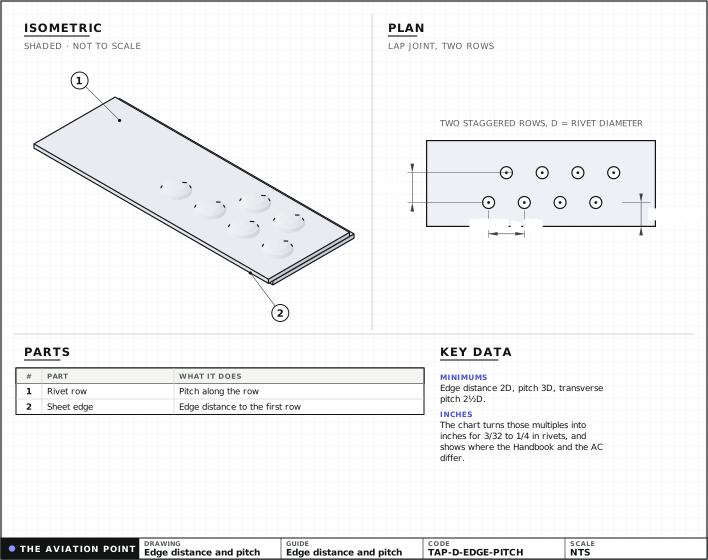 Rivet Edge Distance, Pitch & Transverse Pitch ChartReference charts
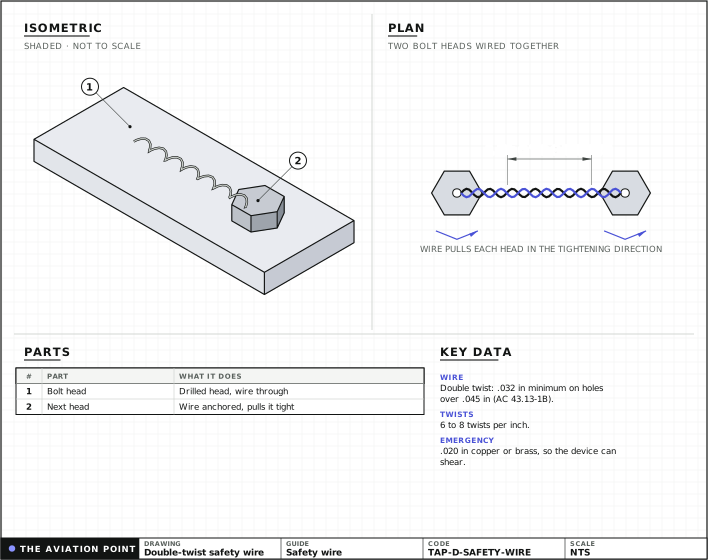 Safety Wire Sizes & Methods ChartReference charts
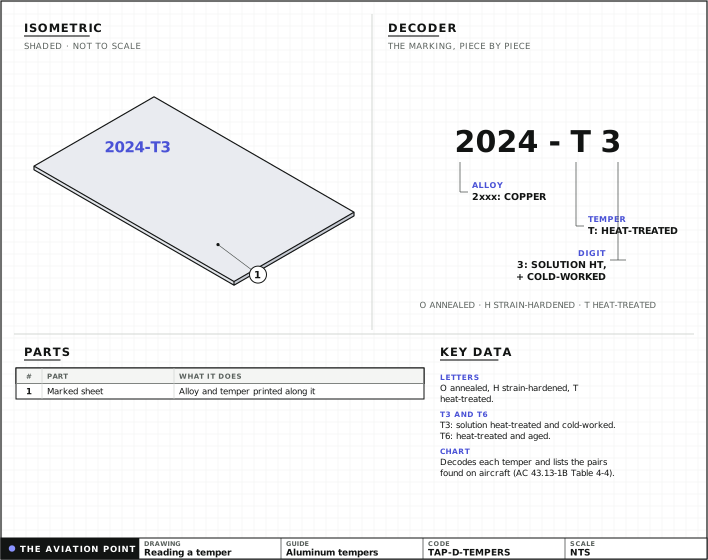 Aluminum Temper Designations ChartReference charts
- Bend deduction for 90° bends, metricReference charts · Coming soon
- Damage types at a glanceReference charts · Coming soon
- Which manual says whatReference charts · Coming soon
- Sheet metalSection →
 Damage classificationSheet metal
- Corrosion: types and removalSheet metal · Coming soon
- Cracks and stop drillingSheet metal · Coming soon
- Dents, nicks and scratchesSheet metal · Coming soon
- Structural repair principlesSheet metal · Coming soon
- Patches and doublersSheet metal · Coming soon
- Flush patches and insertionsSheet metal · Coming soon
- Stringer and frame splicesSheet metal · Coming soon
- Metal-bonded honeycomb panelsSheet metal · Coming soon
- Identifying and substituting materialSheet metal · Coming soon
- Rivet pitch, edge distance and patternsSheet metal · Coming soon
- Removing and replacing rivetsSheet metal · Coming soon
- Blind fasteners in repairsSheet metal · Coming soon
- Bending: bend allowance and setbackSheet metal · Coming soon
- Joggles, relief holes and lightening holesSheet metal · Coming soon
- Forming and heat treatmentSheet metal · Coming soon
- Fay-surface and fillet sealingSheet metal · Coming soon
- Protecting a repair: conversion coat and primerSheet metal · Coming soon
- CompositesSection →
 Vacuum baggingComposites
- Composite basicsComposites · Coming soon
- Ply orientation and the warp clockComposites · Coming soon
- Wet layup and impregnationComposites · Coming soon
- Composite damage typesComposites · Coming soon
- Inspecting compositesComposites · Coming soon
- Repair or replaceComposites · Coming soon
- Choosing the repairComposites · Coming soon
- Sizing the repair pliesComposites · Coming soon
- Scarf and step sandingComposites · Coming soon
- Honeycomb sandwich repairsComposites · Coming soon
- Bolted and riveted patches on compositesComposites · Coming soon
- Lightning strike protection repairsComposites · Coming soon
- Inserts and potted fasteners in sandwich panelsComposites · Coming soon
- Curing a repair: heat blankets and thermocouplesComposites · Coming soon
- Storing and handling materialsComposites · Coming soon
- Fillers and adhesivesComposites · Coming soon
- Safety with resins and dustComposites · Coming soon
- Moulds and parts for UAV and homebuiltComposites · Coming soon
- Composite glossaryComposites · Coming soon
Nothing matches. Try the site search (⌘K).
AN bolts, AN3 to AN8
The AN hex head bolt in six diameters. Pick the diameter from the design or the hole, the dash number from the grip, the letters from material and drilling. One data sheet per size, every figure from AN3 thru AN20 Rev. 12.
Data sheetsUpdated 2026-10-27
Blind fasteners
One data sheet per standard, transcribed from the standard itself: dimensions by size and every part number.
Data sheetsUpdated 2026-10-27
Nutplates
A nutplate is a self-locking nut riveted behind a panel, so a screw can go in from the front without a hand behind it. The shape decides where it fits; the thread decides the size. Every figure on the sheets below comes from the MS standard named on it.
Data sheetsUpdated 2026-10-27
Nuts
One data sheet per standard, transcribed from the standard itself: dimensions by size and every part number.
Data sheetsUpdated 2026-10-27
Screws
One data sheet per screw standard, transcribed from the standard itself: head and slot dimensions by size and every part number.
Data sheetsUpdated 2026-10-27
Washers
One data sheet per standard, transcribed from the standard itself: dimensions by size and every part number.
Data sheetsUpdated 2026-10-27
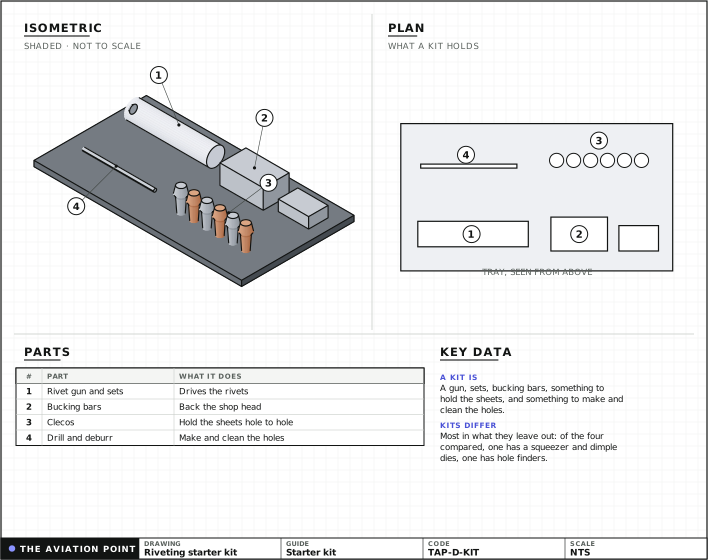
Sheet Metal Tool Kit: What Goes In It
A riveting kit is a gun, sets, bucking bars, something to hold the sheets, and something to make and clean the holes. Commercial kits differ most in what they leave out: only one of the four below includes a squeezer and dimple dies, and only one includes hole finders.
Buying guideUpdated 2026-09-30
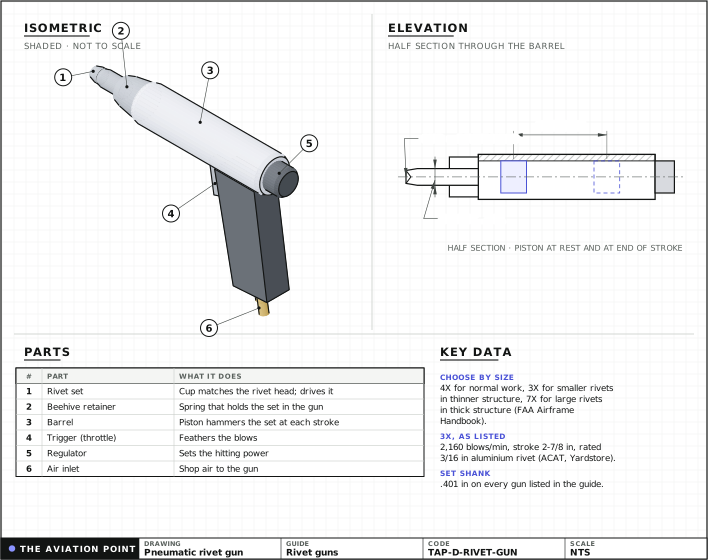
Rivet Guns: Which Size for Which Rivet
Choose the gun by the largest rivet you will drive all day, not by price. The FAA Airframe Handbook's rule is short: a 4X for normal work, a 3X for smaller rivets in thinner structure, a 7X for large rivets in thick structure. The table below shows what each size means in blows per minute, stroke and rated capacity.
Buying guideUpdated 2026-09-30
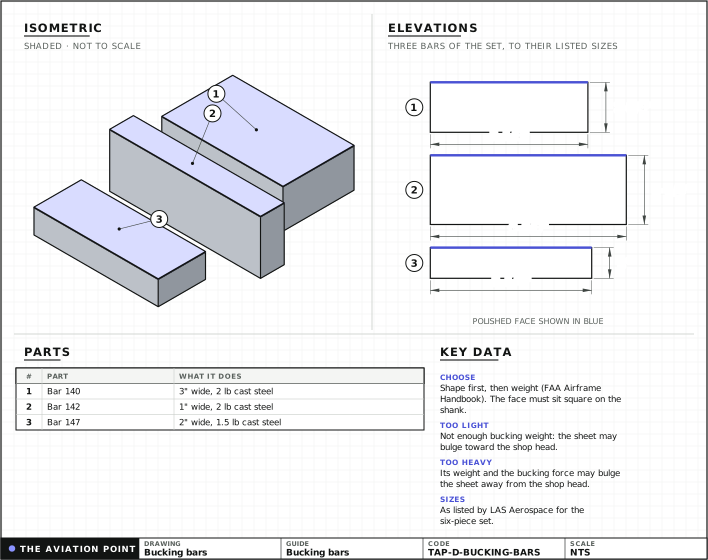
Bucking Bars: Shape First, Then Weight
The FAA Airframe Handbook puts it in order: "the first consideration is shape", then weight. A bar too light bulges the sheet toward the shop head; one too heavy bulges it away. Neither FAA source gives a weight per rivet size, so this guide does not invent one.
Buying guideUpdated 2026-09-30
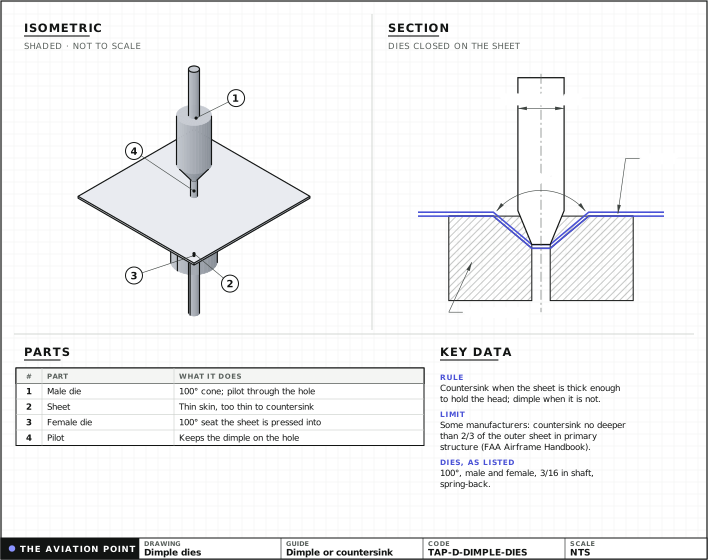
Dimple or Countersink: Which Method, Which Tools
Sheet thickness decides. Countersink when the sheet is thick enough to hold the head; dimple when it is not. The FAA Airframe Handbook reports the current limit some manufacturers use for primary structure: countersink no deeper than two-thirds of the outer sheet. The tools follow from that choice.
Buying guideUpdated 2026-10-26
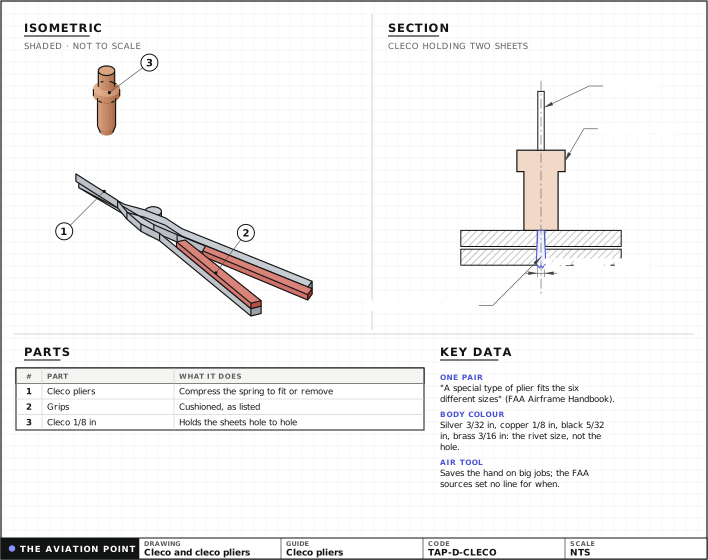
Cleco Pliers, and When a Cleco Gun Is Worth It
The FAA Airframe Handbook settles most of the decision in one line: "A special type of plier fits the six different sizes." One pair of pliers covers every spring cleco. A pneumatic tool saves the hand on jobs with hundreds of clecos; neither FAA source says where that line falls, so this guide does not either.
Buying guideUpdated 2026-10-06
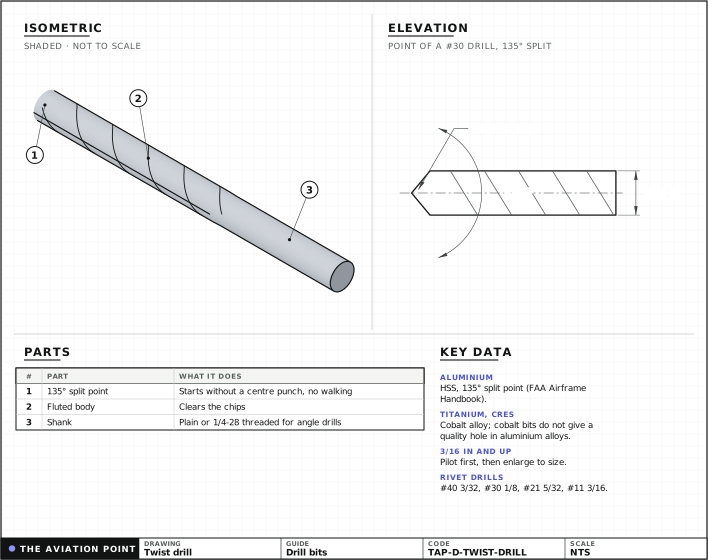
Drill Bits for Aluminum: What the FAA Handbook Specifies
The FAA Airframe Handbook is specific: "The standard twist drill bits used for drilling aluminum are made from HSS and have a 135° split point." Cobalt is for titanium and corrosion-resistant steel, and the Handbook says cobalt bits "do not produce a quality hole in aluminum alloys". Every bit in our catalog today is c…
Buying guideUpdated 2026-10-06
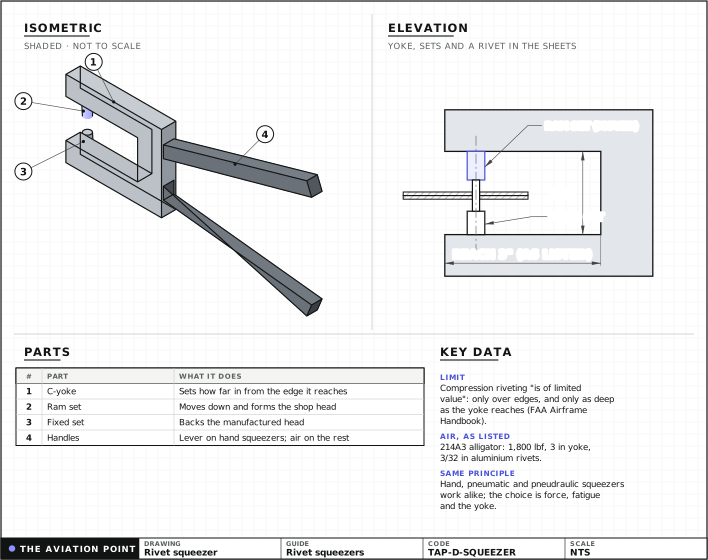
Rivet Squeezers: Hand or Pneumatic, and Which Yoke
The FAA Airframe Handbook is blunt: compression riveting "is of limited value", because it works only over edges and only as deep as the yoke reaches. Inside that limit it is quick and needs one person. Hand, pneumatic and pneudraulic squeezers "operate on the same principles"; the choice is force, fatigue and the yoke…
Buying guideUpdated 2026-10-06
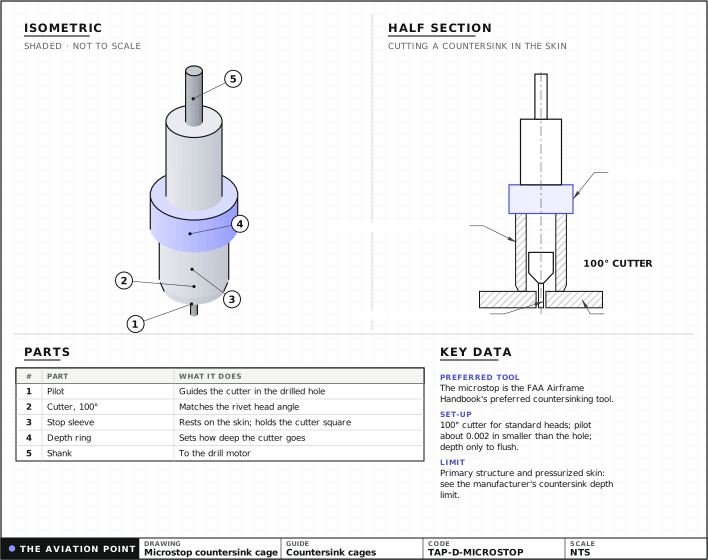
Microstop Countersink Cages: How to Set One, and Which
The FAA Airframe Handbook calls the microstop "the preferred countersinking tool": an adjustable sleeve stops the cutter at a set depth and holds it square. Setting it is the skill. This guide covers the cage and its cutters; whether to countersink or dimple at all is in the dimple or countersink guide.
Buying guideUpdated 2026-10-06
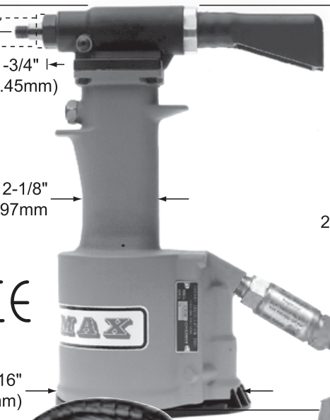
Cherry pulling heads and riveters: every tool sheet and manual
Cherry's tooling lives in dozens of separate PDFs. Here they are in one list: each riveter with its manual, each pulling head with what it installs out of the box, the riveters it fits and its tool sheet. To get the head for one rivet, use the pulling head selector.
Tool guideUpdated 2026-10-28
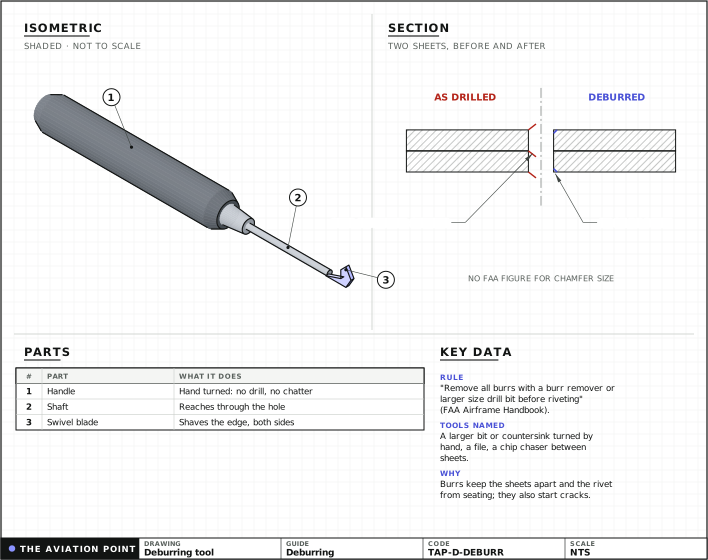
Deburring Tools for Aluminum: Holes, Edges, Between Sheets
Both FAA sources treat deburring as part of drilling: "Remove all burrs with a burr remover or larger size drill bit before riveting." The tools they name are plain: a larger bit or a countersink turned by hand, a file, a chip chaser. The listed tools do the same jobs, some faster. Neither source mentions abrasive whee…
Buying guideUpdated 2026-10-06
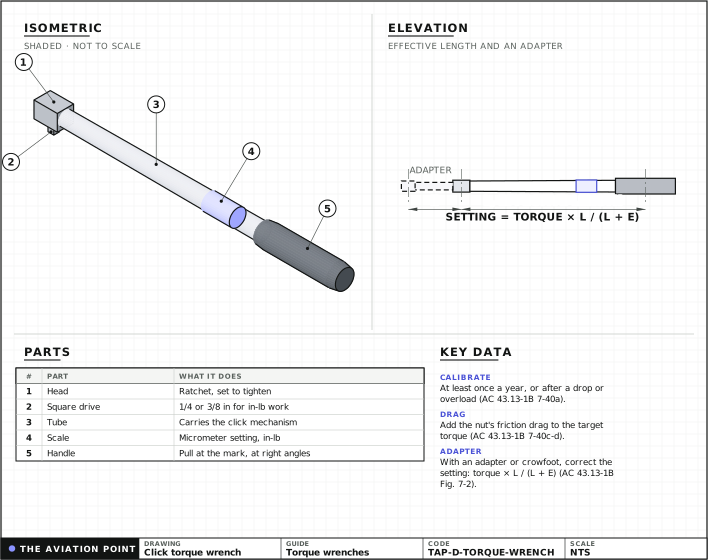
Torque Wrenches: Click, Dial or Beam, and What Range
Start from the range, not the type. AN bolt torques sit in inch-pounds, and a wrench is only as accurate as the part of its scale you use. AC 43.13-1B adds three rules that decide the rest: calibrate at least once a year, add friction drag to the target, and correct for any adapter.
Buying guideUpdated 2026-10-28
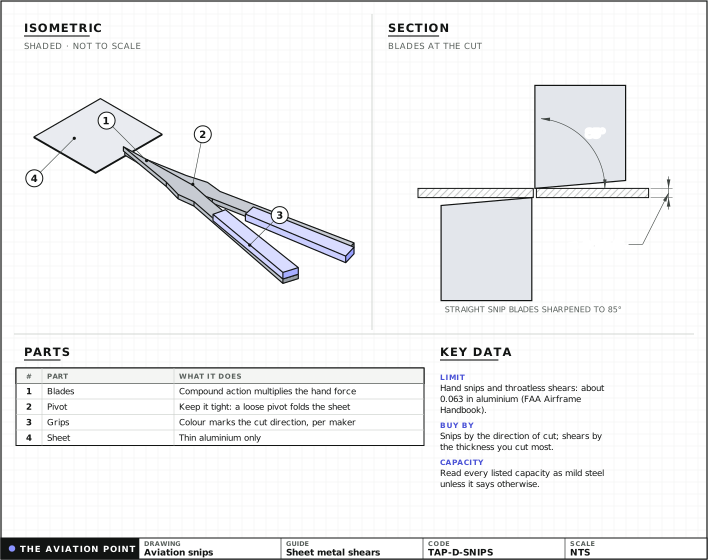
Sheet Metal Shears: Snips, Throatless Shears and Notchers
Hand tools cut thin aluminum; the Handbook puts the limit at about 0.063 in for straight snips and throatless shears. Buy snips by the direction of cut, shears by the thickness you cut most, and read every listed capacity as steel unless it says otherwise.
Buying guideUpdated 2026-10-28
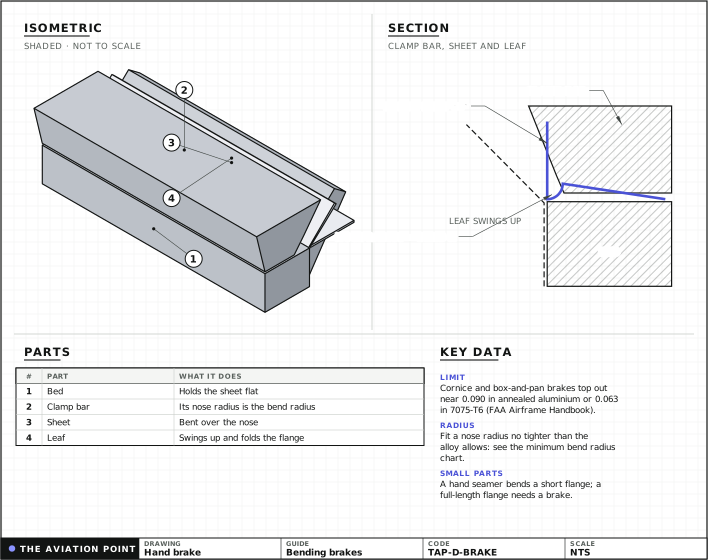
Bending Brakes and Hand Seamers: What Each Can Bend
A small repair part is bent with a hand seamer; a full-length flange needs a brake. The Handbook sizes brakes by gauge and length, and warns that the usual cornice and box-and-pan brake tops out near 0.090 in annealed aluminum or 0.063 in 7075-T6.
Buying guideUpdated 2026-10-28
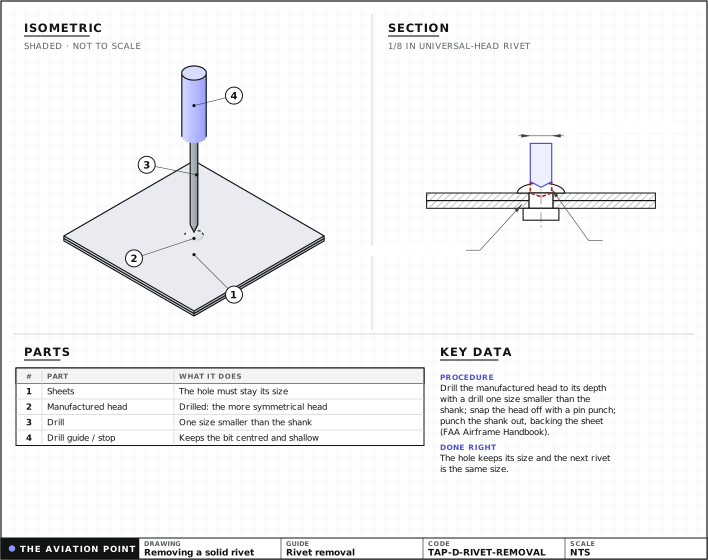
Rivet Removal Tools: Drilling Out Without Damaging the Hole
Remove a rivet by drilling off the manufactured head and punching out the shank. Done right, the hole keeps its size and the next rivet can be the same size; done wrong, the joint weakens. The tools that matter are a depth stop, a guide and a punch.
Buying guideUpdated 2026-10-28
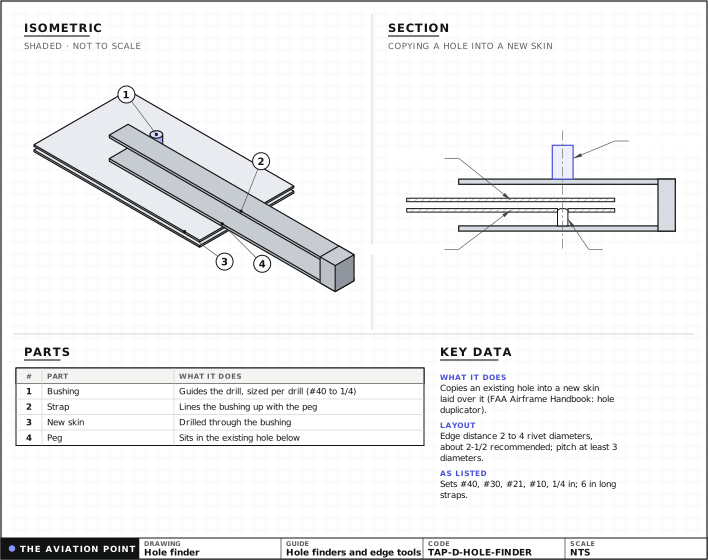
Hole Finders, Edge Markers and Rivet Spacers
Layout tools put the rivet pattern where the Handbook wants it: edge distance of 2 to 4 rivet diameters, about 2-1/2 recommended, and pitch of at least 3 diameters. A hole finder copies an existing hole; a spacer and a marker block set the new ones.
Buying guideUpdated 2026-10-28
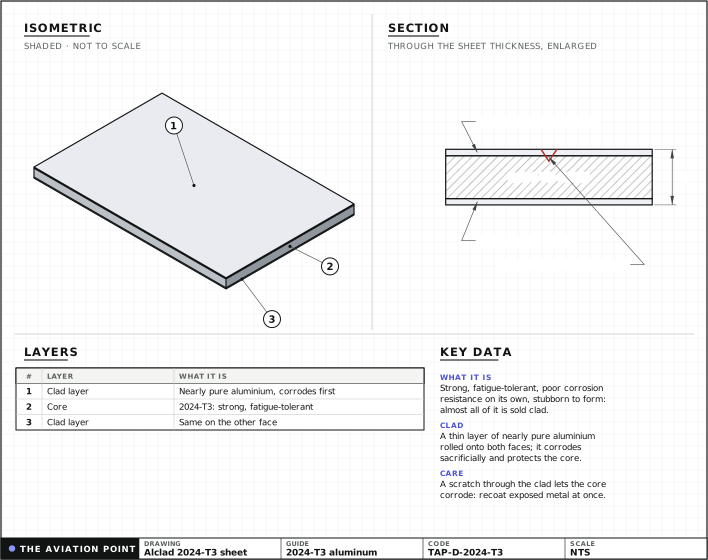
2024-T3 Aluminum
The default skin alloy of light aircraft structures. Strong, fatigue-tolerant, poorly corrosion-resistant on its own, and stubborn to form — which is why almost all of it is sold clad.
SpecUpdated 2026-09-01
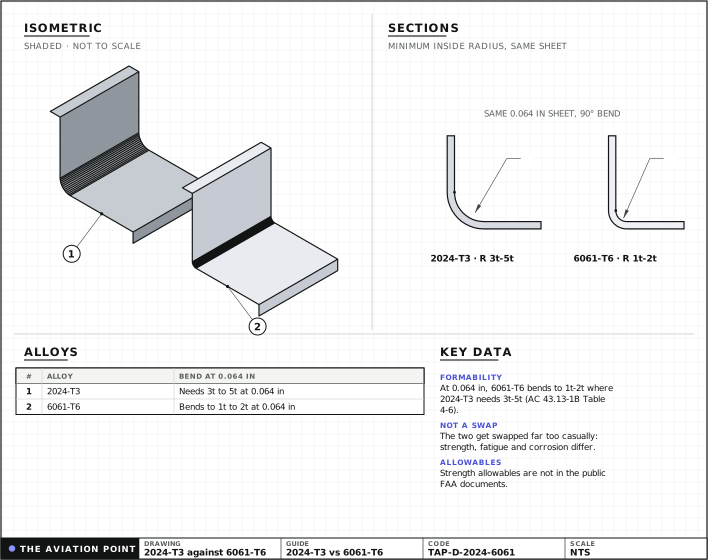
2024-T3 vs 6061-T6
At 0.064 in, 6061-T6 bends to 1t–2t where 2024-T3 needs 3t–5t (AC 43.13-1B Table 4-6), and that formability gap decides most jobs. The two get swapped far too casually. The strength allowables are not in the public FAA documents, so the honest comparison is narrower than most pages pretend.
ComparisonUpdated 2026-10-26
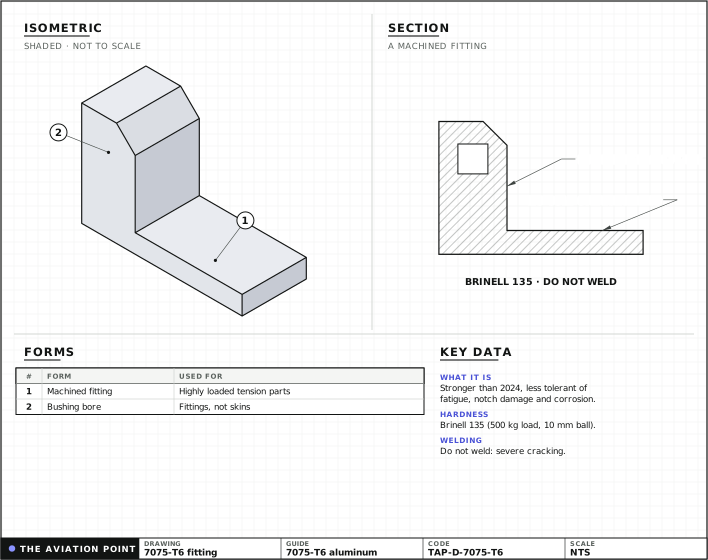
7075-T6 Aluminum
Stronger than 2024, less tolerant of fatigue, notch damage and corrosion. It lives in machined fittings and highly loaded tension parts, not in skins, and it does not forgive cold straightening.
SpecUpdated 2026-10-28
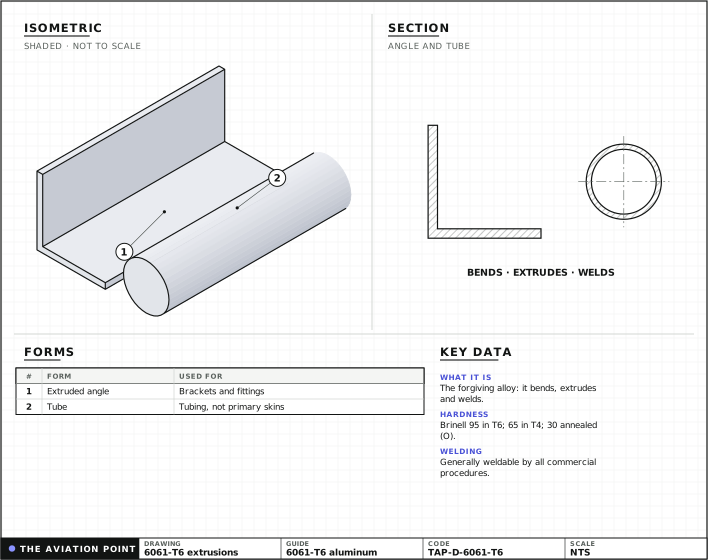
6061-T6 Aluminum
The forgiving alloy: it bends, extrudes and welds. Tubing, brackets and fittings, not primary skins.
SpecUpdated 2026-10-28
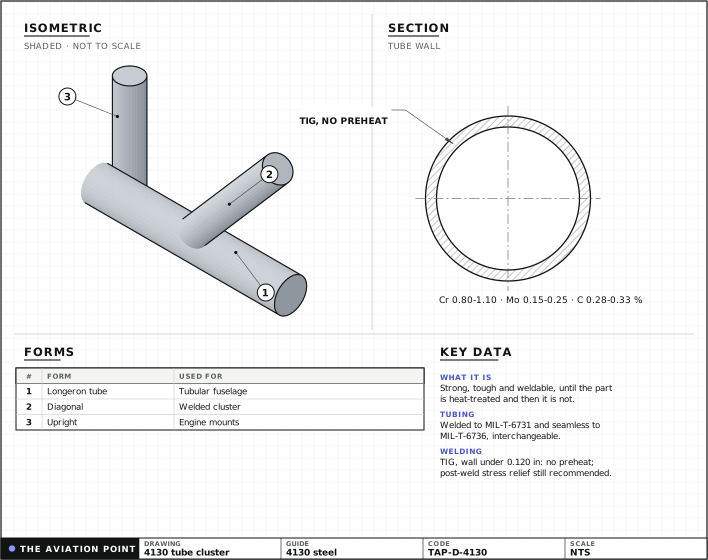
4130 Steel
The tubular fuselage and engine-mount steel. Strong, tough and weldable, until the part is heat-treated and then it is not.
SpecUpdated 2026-10-28
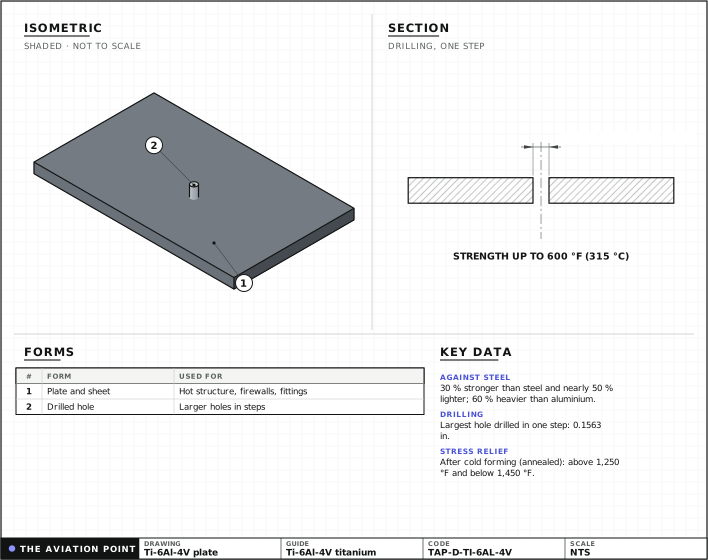
Ti-6Al-4V Titanium
The workhorse titanium alloy. Light, strong, corrosion-resistant, and hard to form, drill and finish without damaging it.
SpecUpdated 2026-10-28
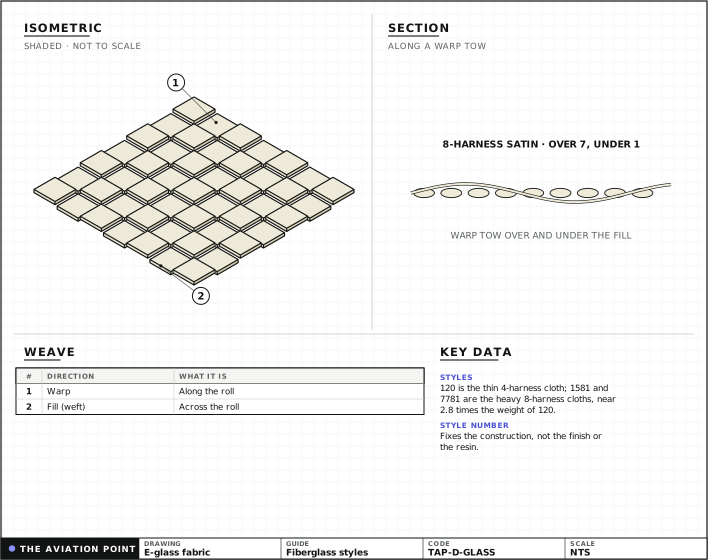
Fiberglass Fabric Styles
Style 120 is the thin 4-harness cloth; 1581 and 7781 are the heavy 8-harness cloths, near 2.8 times the weight of 120. The style number fixes the construction, not the finish or the resin.
SpecUpdated 2026-10-28
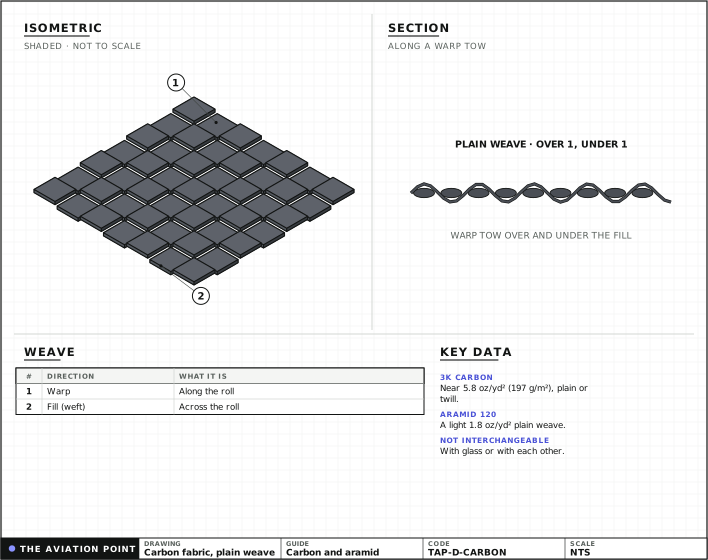
Carbon and Aramid Fabric
3K carbon fabric runs near 5.8 oz/yd² (197 g/m²) in plain or twill. Style 120 aramid is a light 1.8 oz/yd² plain weave. They are not interchangeable with glass or with each other.
SpecUpdated 2026-10-28
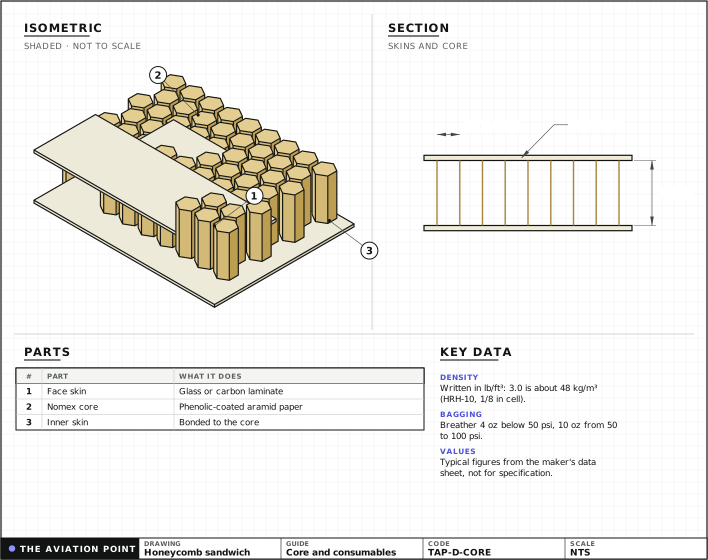
Core and Bagging Consumables
Core density is written in pounds per cubic foot: 3.0 is about 48 kg/m³. Breather weight follows cure pressure: 4 oz below 50 psi, 10 oz from 50 to 100 psi.
SpecUpdated 2026-10-28
Fillers: microballoons and fumed silica
What it will cover. What each filler does to a resin, how much to add, potting and fairing mixes.
Which repair material for which part
What it will cover. Glass, carbon, aramid and metal parts: what each may be repaired with.
Sealant types and classes
What it will cover. Polysulfide and polythioether sealants, class A, B and C, dash numbers, what each is for.
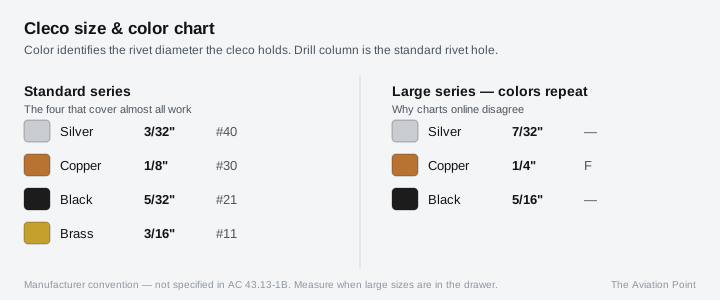
Cleco Size & Color Chart
Silver holds 3/32 in rivets, copper 1/8 in, black 5/32 in and brass 3/16 in: a cleco's color marks the rivet size it is made for, not the hole it fits. The same four colors repeat on the large series, which is where most of the conflicting charts online come from.
ChartUpdated 2026-10-26
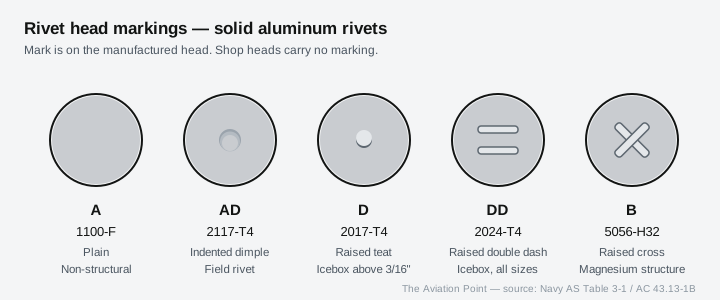
Rivet Identification Chart
A plain head is A (1100), an indented dimple AD (2117), a raised teat D (2017), a raised double dash DD (2024), a raised cross B (5056). The marking gives the alloy, and the alloy decides whether the rivet is driven as received or kept refrigerated.
ChartUpdated 2026-10-26
Drill Size per Rivet Chart
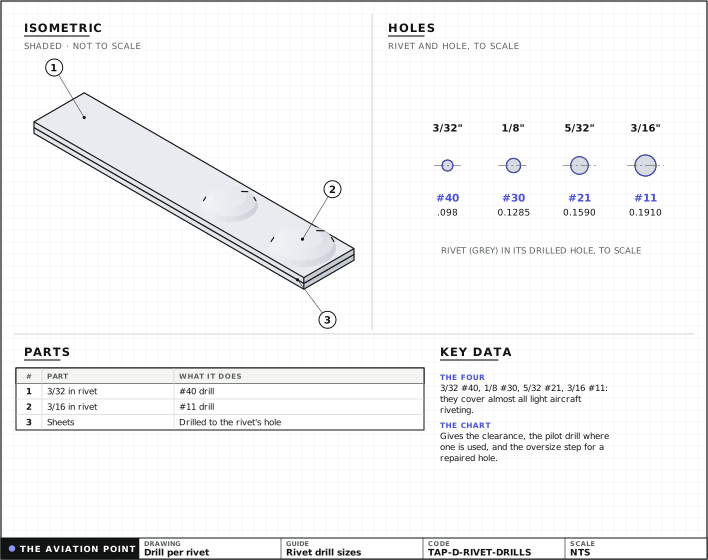
A 3/32 in rivet takes a #40 drill, 1/8 in a #30, 5/32 in a #21 and 3/16 in a #11. Those four number drills cover almost all light aircraft riveting. The chart below gives each rivet its drill, the clearance that results, the pilot drill where one is used, and the oversize step when a hole has to be repaired.
ChartUpdated 2026-10-26
Minimum Bend Radius Chart
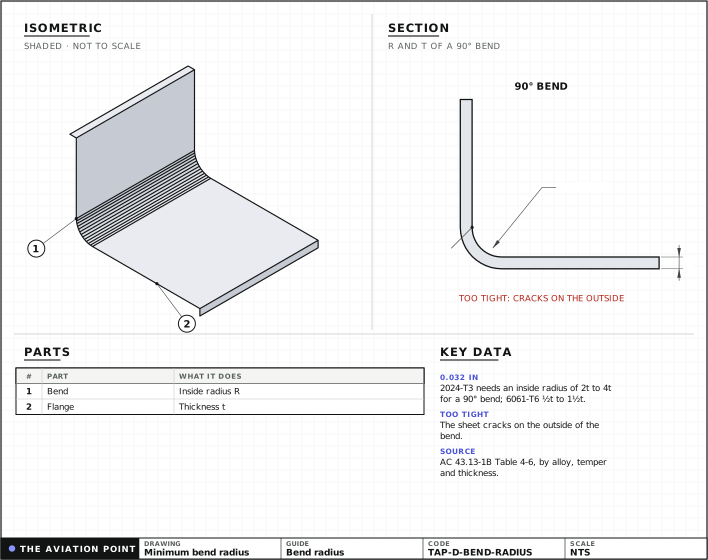
0.032 in 2024-T3 needs an inside radius of 2t to 4t for a 90° bend; 6061-T6 of the same thickness, ½t to 1½t. Bend tighter than the alloy and temper allow and the sheet cracks on the outside of the bend. This is Table 4-6 of AC 43.13-1B in full — the recommended radii by alloy and by thickness.
ChartUpdated 2026-10-26
Aluminum Sheet Gauge Chart
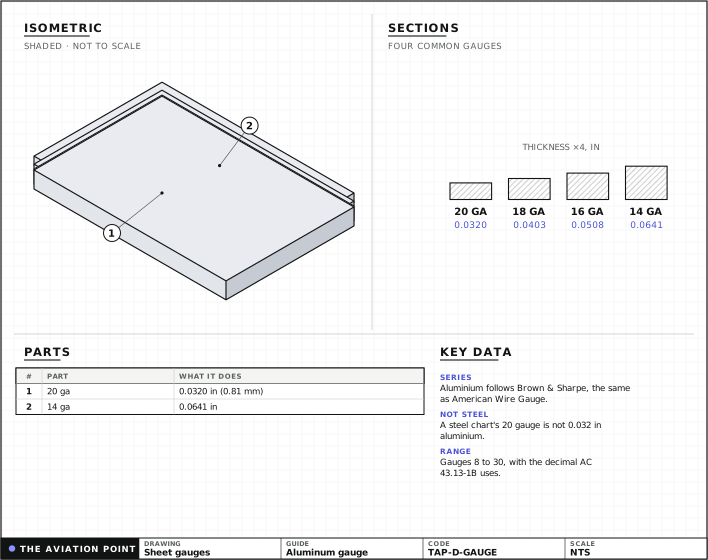
20 gauge aluminum is 0.0320 in (0.81 mm); 18 gauge is 0.0403 in (1.02 mm). Aluminum sheet follows the Brown & Sharpe series, the same as American Wire Gauge. Steel sheet uses a different series, so a steel chart's 20 gauge is not 0.032 in aluminum. Gauges 8 to 30, with the decimal AC 43.13-1B uses.
ChartUpdated 2026-10-26
AN Bolt & Nut Torque Chart
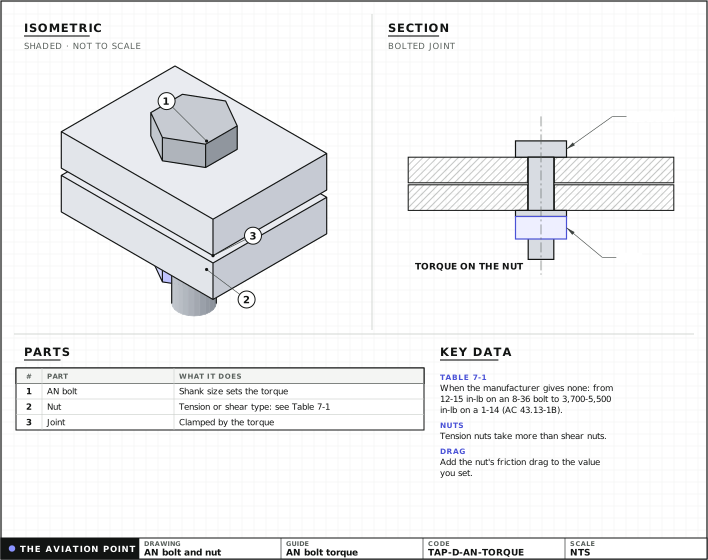
When the manufacturer gives no torque, AC 43.13-1B Table 7-1 does: from 12–15 in-lb on an 8-36 bolt up to 3,700–5,500 in-lb on a 1-14. Tension nuts (AN310, MS20365) take more than shear nuts (AN320, MS20364). Add the nut's drag torque to the number you set.
ChartUpdated 2026-10-28
Drill Size Chart: Number, Letter & Fraction
Number drills run from #80 (0.0135 in) up to #1 (0.2280 in), letters from A (0.2340 in) to Z (0.4130 in), fractions in 64ths. Rivet holes use #40, #30, #21, #11 and F. All decimals are from the FAA Airframe Handbook, with millimetres converted.
ChartUpdated 2026-10-28
Rivet Edge Distance, Pitch & Transverse Pitch Chart
Edge distance starts at 2D, pitch at 3D and transverse pitch at 2½D. The tables turn those multiples into inches for 3/32, 1/8, 5/32, 3/16 and 1/4 in rivets, and show where the Handbook and the AC give different figures.
ChartUpdated 2026-10-28
Safety Wire Sizes & Methods Chart
Double-twist safety wire is 0.032 in minimum on holes over 0.045 in, with 6 to 8 twists per inch. Emergency devices take 0.020 in copper or brass so they can shear. The chart sets out wire by use, the two methods and the materials the sources name.
ChartUpdated 2026-10-28
Aluminum Temper Designations Chart
The letter after the alloy number says how the metal was hardened: O is annealed, H is strain-hardened, T is heat-treated. T3 is solution heat-treated and cold-worked; T6 is heat-treated and aged. The chart decodes each temper and lists the pairs found on aircraft.
ChartUpdated 2026-10-28
Bend deduction for 90° bends, metric
What it will cover. Shortening for a 90° bend by thickness and radius, in millimetres, worked from the setback formula.
Damage types at a glance
What it will cover. Brinelling to upsetting: every damage word in one line each.
Which manual says what
What it will cover. AMM, SRM, IPC, WDM, SB, AD: what each document governs and where to look first.
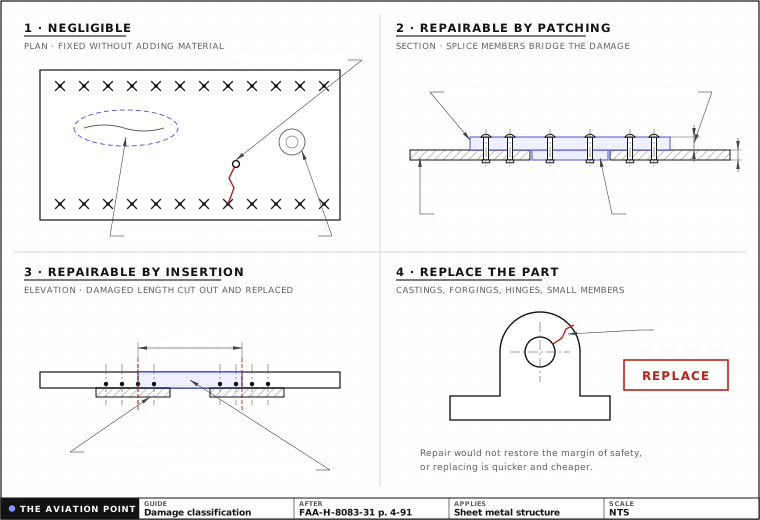
Sheet Metal Damage: Which of the Four Classes Is It?
Every structural damage ends in one of four boxes: negligible (fixed without adding material), repairable by patching, repairable by insertion, or replace the part. The limits between them are not general: they come from the aircraft's structural repair manual (SRM). This guide is how to sort the damage before you open…
GuideUpdated 2026-10-28
Corrosion: types and removal
What it will cover. Surface, pitting, intergranular, filiform, exfoliation and galvanic corrosion; how much may be removed.
Corrosion Blend-Out Calculator →Galvanic Corrosion Checker →
Cracks and stop drilling
What it will cover. Finding the crack tip, stop-drill size, when a stop drill is only temporary.
Dents, nicks and scratches
What it will cover. Measuring them, blending them out, when they need a patch.
Structural repair principles
What it will cover. Strength, stiffness, weight and shape; same material; never thinner than the original.
Patches and doublers
What it will cover. External and internal patches, sizing the doubler, counting the rivets.
Skin Doubler Layout: Rivets, Rows and Size →Rivet Spacing & Pitch Calculator →Rivet Edge Distance Calculator →
Flush patches and insertions
What it will cover. Cutting out the damage, filler plate, backing doubler, keeping the contour.
Stringer and frame splices
What it will cover. Splicing an angle, a channel or a frame: splice length, rivets each side.
Metal-bonded honeycomb panels
What it will cover. Potted repairs, core replacement, riveted patches on metal sandwich.
Identifying and substituting material
What it will cover. Reading the marking, clad or bare, which alloy may replace which.
Rivet pitch, edge distance and patterns
What it will cover. Single and multiple rows, staggered patterns, transverse pitch.
Rivet Spacing & Pitch Calculator →Rivet Edge Distance Calculator →
Removing and replacing rivets
What it will cover. Drilling out a rivet, oversize, when to go to the next size or a different fastener.
Rivet Replacement in an Enlarged Hole →Rivet Shop Head Inspection →
Blind fasteners in repairs
What it will cover. Where blind rivets may replace solid rivets, grip, installation checks.
Bending: bend allowance and setback
What it will cover. Minimum radius, bend allowance, setback, flat pattern, sight line.
Joggles, relief holes and lightening holes
What it will cover. Joggle depth and length, relief holes at bend intersections, flanged lightening holes.
Forming and heat treatment
What it will cover. Which temper forms, icebox rivets, solution heat treatment and ageing.
Fay-surface and fillet sealing
What it will cover. Sealant classes, fay-surface, fillet and fastener sealing, cure times.
Sealant Fillet & Cartridges →Two-Part Mix Ratio Calculator →
Protecting a repair: conversion coat and primer
What it will cover. Cleaning, conversion coating, primer, wet installation of fasteners.
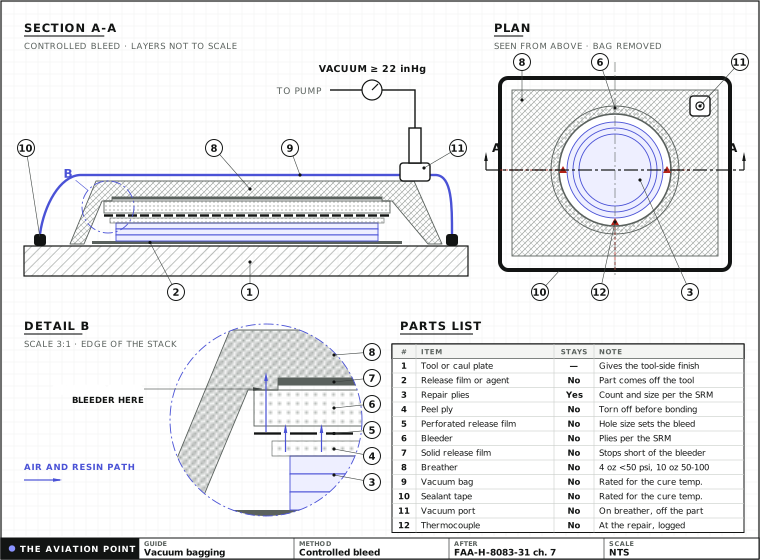
Vacuum Bagging: Every Layer and What It Does
A vacuum bag lets the atmosphere press the plies together while the air and volatiles leave. None of the bagging materials stays in the part, and each does one job: peel ply leaves a surface to bond to, release film stops things sticking, bleeder takes resin, breather carries the vacuum. Get the order or the bleed wron…
GuideUpdated 2026-10-28
Composite basics
What it will cover. Fibres, resins and cores: glass, carbon and aramid; epoxy, polyester and phenolic; prepreg or wet layup; warp and fill.
Ply orientation and the warp clock
What it will cover. 0°, ±45° and 90° plies, symmetric and balanced laminates, how a layup is written, and matching each repair ply to the ply it replaces.
Wet layup and impregnation
What it will cover. Weighing fabric and resin, fibre-to-resin ratio, squeegee and vacuum-assisted impregnation, working inside the pot life.
Two-Part Mix Ratio Calculator →Pot Life Timer →Laminate Plies & Resin →
Composite damage types
What it will cover. Delamination, disbond, matrix cracks, broken fibres, core crush, water in the core, heat and lightning damage: what each looks like.
Inspecting composites
What it will cover. Visual, tap test, ultrasonic and thermography: what each finds, what it misses, how to map a damage.
Repair or replace
What it will cover. Damage allowed without repair, damage repaired by a standard scheme, damage that needs an approved repair design, and replacement.
Choosing the repair
What it will cover. Filler and potting, wet-layup patch, scarf or step repair, bolted hard patch: which one fits which damage.
Sizing the repair plies
What it will cover. Filler, repair and extra plies; overlaps; orientation; how many of each.
Scarf and step sanding
What it will cover. Taper ratios, sanding technique, counting the plies as you go, cleaning before the bond.
Honeycomb sandwich repairs
What it will cover. Potting small damage, replacing a core plug, injecting a disbond, one-side or through repairs.
Bolted and riveted patches on composites
What it will cover. Overlap, fasteners for composite structure, drilling carbon, sealing the patch.
Lightning strike protection repairs
What it will cover. Mesh and foil, overlaps, restoring the conduction path, checking the bonding afterwards.
Inserts and potted fasteners in sandwich panels
What it will cover. Potting, insert types, installing and replacing an insert.
Curing a repair: heat blankets and thermocouples
What it will cover. Room temperature or heat, hot bonders, where the thermocouples go, ramp and soak, the cure record.
Storing and handling materials
What it will cover. Freezer storage, out-time, thawing, shelf life, labelling.
Fillers and adhesives
What it will cover. Microballoons, fumed silica, film and paste adhesives, mixing and thickening.
Safety with resins and dust
What it will cover. Skin, eyes, fumes, carbon dust and waste.
Moulds and parts for UAV and homebuilt
What it will cover. Making a mould, release, laying up on a mould, infusion basics.
Composite glossary
What it will cover. The words of the trade, from B-stage to warp clock.