The drawing
Where to buy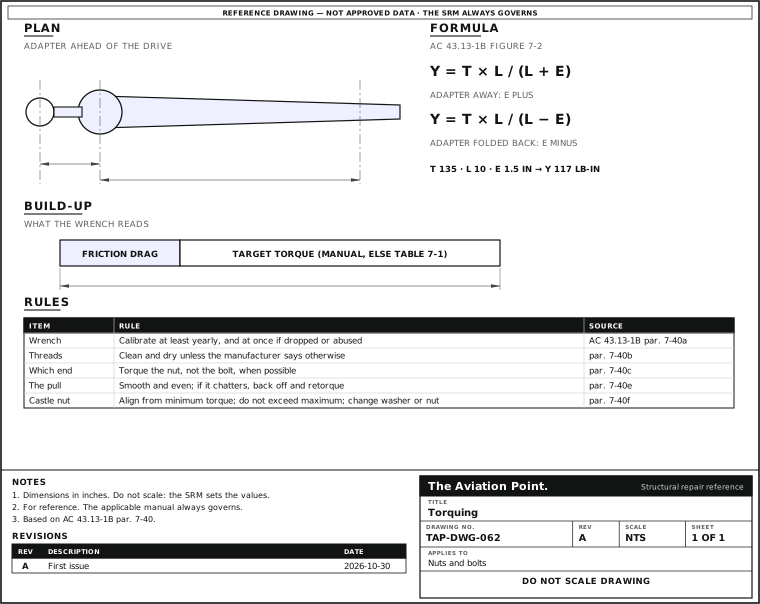
Step by step
| Step | Action | What to do |
|---|---|---|
| 1 | Find the torque | Manufacturer first; else Table 7-1. AN bolt torque chart. Use the bolt shank size, not the wrench size. |
| 2 | Check the wrench | Calibrated within a year, not dropped. |
| 3 | Check the threads | Clean and dry, unless the manufacturer specifies otherwise. |
| 4 | Measure friction drag | Run the nut to near contact and read the torque needed to turn it. |
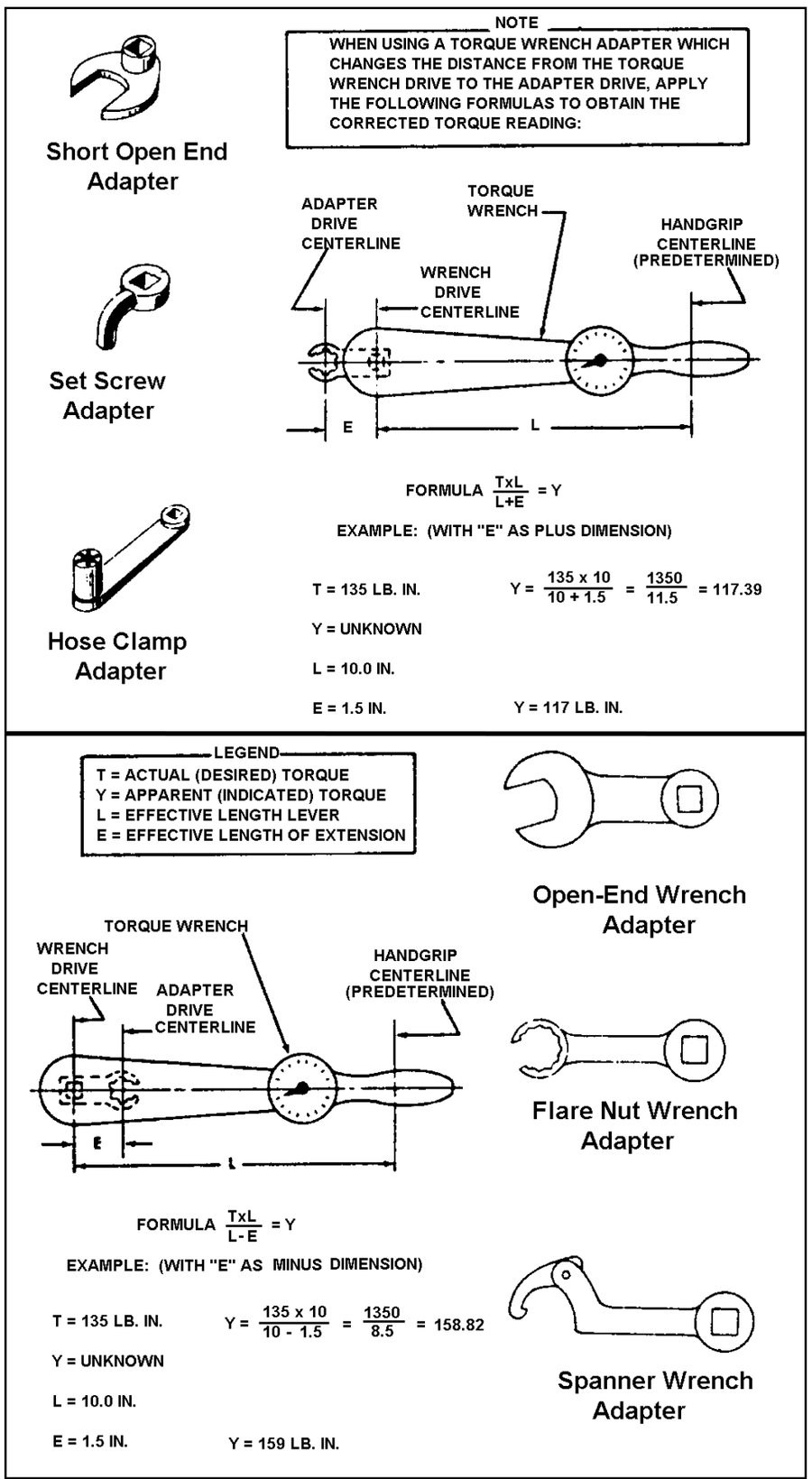
| 5 | Work out final torque | Target + friction drag. With an adapter, correct it: calculator. |
| 6 | Pull | On the nut, not the bolt, when possible. Smooth and even. If it chatters, back off and retorque. |
| 7 | Castle nut | Align from minimum torque plus drag. Never exceed the maximum: change the washer or nut. |
| 8 | Then safety it | See safety wire. |
Tools you need
| Tool | What for | Buying guide | Catalog |
|---|---|---|---|
| Torque wrench | Calibrated | Torque wrenches | — |
| Hardware | AN bolts and nuts | AN bolts | AN3 bolts |
| Self-locking nuts | Check prevailing torque | — | AN365 nuts |
What to check when it is done
| Look at | Good | If not |
|---|---|---|
| Reading | Final torque reached smoothly | Chatter: back off and retorque |
| Castle nut | Pin aligned within limits | Change washer or nut |
| Self-locking nut | Meets minimum prevailing torque | Replace |
| Reused bolts | Stretch check where required | Follow the manual |
Questions people actually ask
Do I torque the nut or the bolt?
The nut whenever possible: it reduces bolt rotation in the hole and wear. On a bolt head, apply torque plus friction drag.
What is the adapter formula?
Y = T × L / (L ± E). T is the torque you want, Y the wrench reading, L the wrench length, E the adapter extension. Example: 135 × 10 / 11.5 = 117 lb-in.
Limits of this guide
What the sources support, and no further.
- The manual governs. Where the SRM, the drawing or the fastener maker says otherwise, follow them; this page explains general practice.
- Table 7-1 is for oil-free cadmium-plated threads. Other conditions: see the manual.
Where to buy
AmericaDistributor coming soonOur partner for this region is on its way
EuropeDistributor coming soonOur partner for this region is on its way
OceaniaDistributor coming soonOur partner for this region is on its way
Distributors coming soon.
Sources
- FAA AC 43.13-1B CHG 1, Acceptable Methods, Techniques and Practices — par. 7-40, torques; Fig. 7-2; Table 7-1; par. 7-122c.
Educational reference only. not approved data. Always consult the applicable SRM, AMM, or AC 43.13-1B and your certifying authority.