Where paint sits
Where to buy| Layer | Role | Reference |
|---|---|---|
| Conversion coat | Chemical film on bare aluminium | AC 43.13-1B 6-136 |
| Primer | Corrosion barrier and paint base | CA7233 sheet: dry film 15 to 30 microns |
| Topcoat | Colour, weather and fluid protection | CA7233 lists compatible topcoats incl. MIL-PRF-85285 |
| Sealant fillet | Cure before painting | AC 6-134h |
How the AC treats paint
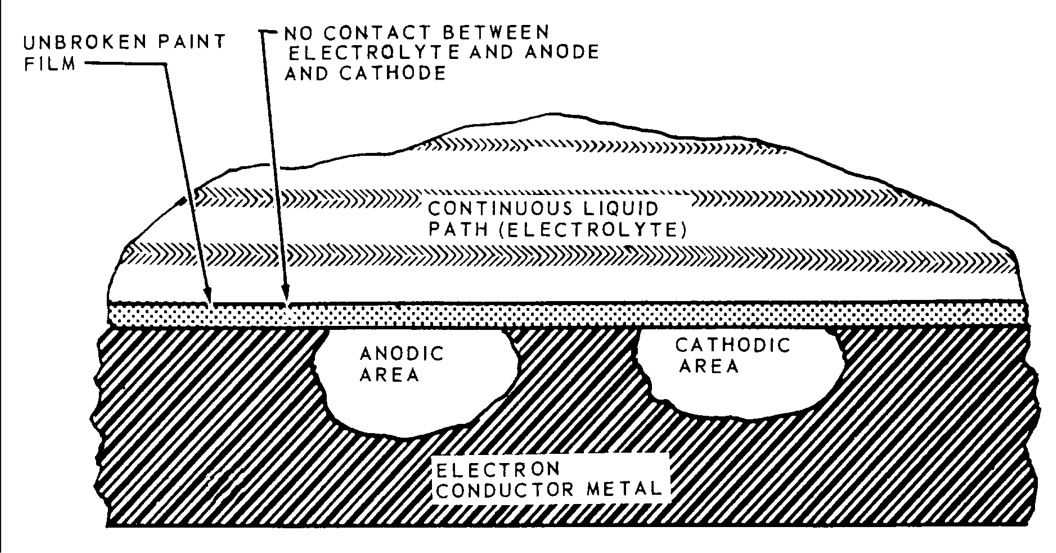
Organic coatings such as zinc chromate primer and enamels are the common corrosion-protection finishes (AC 43.13-1B par. 6-40). On a repair, paint goes on after the fillet sealant has cured (par. 6-134h). The Handbook's chapter 8 describes finishing materials and a solvent test that identifies an unknown coating: nitrocellulose softens quickly, acrylic and epoxy do not, and MEK lifts acrylic pigment but not epoxy. Do not use MEK on nitrocellulose finishes.
Polyurethane topcoat (MIL-PRF-85285 family)
What it is. The topcoat type PPG lists as compatible with its CA7233 primer under MIL-PRF-85285, alongside OEM topcoat specifications.
What it is for. Exterior colour and weather coat over primer.
How it is used. Mix and apply per the maker's data sheet; film thickness from the sheet. The paint film thickness calculator turns wet film into dry film.
Life and cure. Pot life, dry times and cure belong to each product; we read no topcoat sheet and give none.
Safety. Isocyanate-based topcoats have strict SDS requirements. Read the SDS.
Specification. MIL-PRF-85285 and OEM specifications, per the PPG sheet.
Equivalents. Topcoat and primer must be compatible: PPG publishes the lists.
Paint removers
What it is. Solvent, bond release and disintegrating types (AC par. 5-63d).
What it is for. Stripping a finish before repair or inspection.
How it is used. Per the maker and the SRM.
Life and cure. Per the product.
Safety. AC par. 6-90a: strippers are strong alkalies or acids; keep clean water at hand, wear protection, wash splashes off at once.
Specification. From the SRM.
Equivalents. Never on composites or magnesium without approved data.
Questions people actually ask
Can I paint over fresh sealant?
The AC says paint after the fillet sealant has cured (par. 6-134h).
How do I tell what finish is on the aircraft?
The Handbook describes a solvent wipe test: nitrocellulose softens, acrylic comes off on the rag, epoxy does not. Wipe, do not rub.
Where does film thickness come from?
The paint system's data sheet. The calculator only converts.
Limits — when NOT to use this
What the sources support, and no further.
- No topcoat data sheet read. We give no pot life or cure for topcoats.
- The SRM names the paint system. Colours and schemes are outside this page.
Where to buy
Distributors coming soon.
Sources
- FAA AC 43.13-1B CHG 1, Chapter 6 (corrosion control, safety precautions, finishes) — Pars. 6-90 (safety precautions), 6-134 to 6-136 (finish, conversion coat, 48 hour rule, fasteners), section 4 (corrosion preventive maintenance, MIL-C-16173 Grade 4); par. 5-63 (cleaner types).
- FAA-H-8083-31B, Aviation Maintenance Technician Handbook - Airframe, Volume 1 — Chapter 8, aircraft finishes: finishing materials (acetone, alcohol, MEK) and the solvent test for coatings; chapter 7, sealing of bolted composite repairs.
- PPG Aerospace, Desoprime HS CA7233 Military Epoxy Primer, Technical Data Sheet — MIL-PRF-23377 Type I Class C2, mix ratio, induction, pot life, film thickness, dry times, VOC, flash point, shelf life.